Remembering our Past | Repairing our Systems | Reimagining our Community

How often do you think about the place where you live, its history and its relationship to systems of injustice? What can we learn about our society and ourselves as we examine the disparities between different communities within our city? Have you ever considered how Hastings Ranch and Northwest Pasadena came to be what they are today? Have you wondered which communities were displaced due to the construction of the 210 freeway and 710 stub?
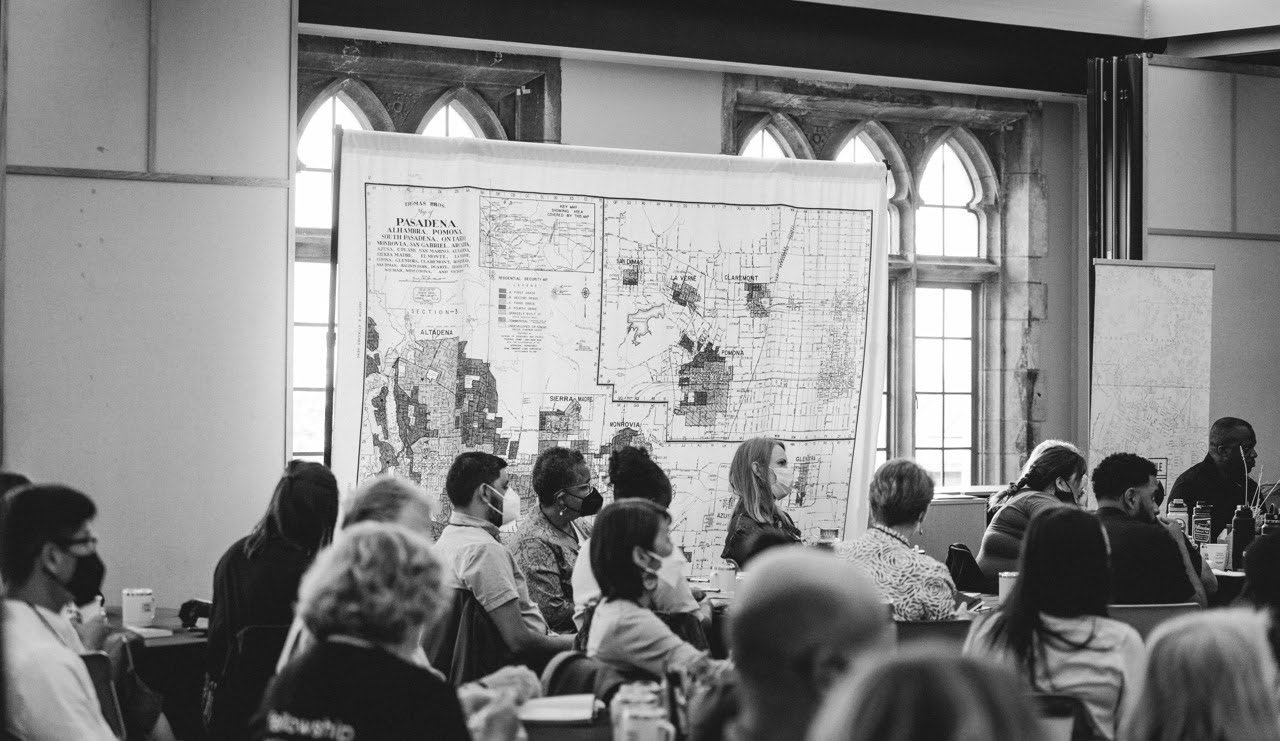
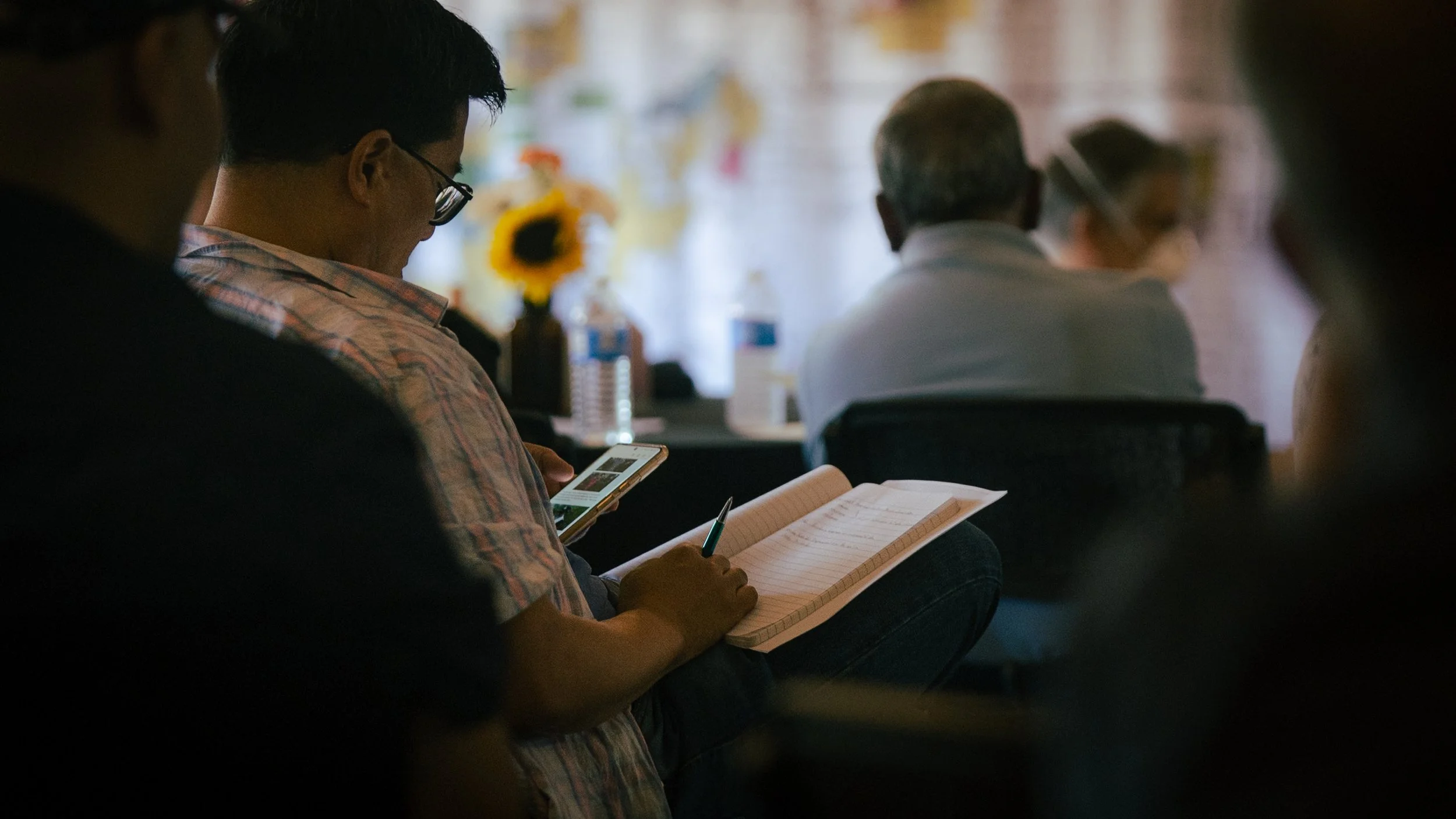
Reconcile Pasadena examines these questions and invites participants to communally develop tools that enable them to engage Pasadena’s racial and geographic history through a theological framework that highlights the underpinnings of advocacy and organizing present throughout Scripture. This program demonstrates how systems and institutions impact people’s daily lives and conversely how people are able to impact systems and institutions in the City of Pasadena.

Truth is, when we examine our city, we examine ourselves. Dr. David Leong argues that the very fabric of our most deeply held beliefs and values, including our cultural identities themselves, are intimately shaped by cul-de-sacs and schools, parking lots and freeway overpasses, parks and grocery stores, and the lives of others we encounter there.

The cohort’s aim is to empower and equip people with the tools to dismantle oppression by turning theory into practical engagement. This is both an educational cohort and an ongoing advocacy group. In light of the impact of the Eaton Fire and ICE Raids in our community in 2025, we have decided to offer a modified cohort immersed in addressing these critical issues. Participants will choose to join one of the following pods: Housing or Immigration. 

Since this cohort is hyper-focused on local change and building community, in order to participate you must live, work, or worship in Pasadena, Altadena, or Sierra Madre.

housing

This pod will explore the history of housing injustice in the city of Pasadena. Join us as we examine how systems such as homelessness, segregation and the affordability crisis are implications of decades of housing discrimination perpetuated through intentional practices and government policies such as redlining, blockbusting, etc. We will also discuss practical and tangible action steps that can be taken that will help bring lasting, systemic change through policy, community organizations and individual activists.

immigration

This pod is for anyone who wants to deepen their solidarity with our local migrant community. Join us as we celebrate the movement of people into this city and consider the ways in which we can stand together against the unprecedented injustices facing our migrant neighbors. This pod will explore Immigration Law, History, and Solidarity in conversation with local activists, community leaders, legal experts, and the affected community. Additionally, participants will be invited to consider ways to meaningfully invite their communities to respond to the challenges and maintain a steady presence in the midst of ongoing oppression.

  • This is both an educational cohort and an ongoing advocacy group. At the end of the 4 months, participants will prepare a summative project and presentation to address the inequalities they learned about and their plan for continued, collaborative action. While our focus is on Pasadena and its unique challenges and opportunities, we recognize the importance of situating our work within a broader context. Throughout the program, we'll draw connections between local issues and state or national issues, inviting guest speakers and looking at case studies from other regions. This broader perspective not only enriches our understanding but also empowers participants to apply lessons learned in Pasadena to wider efforts against racial and geographic disparities.

    By addressing these areas, Reconcile Pasadena strives to deepen its impact, fostering a more inclusive, action-oriented, and well-rounded approach to tackling systemic injustice. Our goal is not just to discuss the intersection of race, geography, and oppression but to actively participate in the creation of more just and equitable communities.

    Topics addressed throughout the cohort will include:

    • Theology of the City
    • How Racism Built Pasadena
    • Who is Your Neighbor?
    • Power and Policymaking
    • Loving Your Neighbor in Action

  • Two Full-Day Retreats:
    August 14-15 and November 20-21; from 9am-6pm each day.

    Two Meetings per Month:
    Pod Sessions: Aug 20, Sep 17, Oct 15, Nov 12 from 6-8:30pm.
    General Sessions: Sep 3, Oct 1, Oct 29 from 6-8:30pm.

  • The total cost of this 4-month cohort is $500. We do not want cost to be a limiting factor, so please reach out and we may be able to provide a sliding scale or scholarship. Email info@cfrjustice.org with any inquiries.

  • Housing:

    Jasmin Shupper is the Founder and CEO of Greenline Housing Foundation, a non-profit organization that aims to close the racial wealth and homeownership gaps and reverse the effects of systemic racism in housing by granting access to homeownership for people of color. She is also the Founder and President of The Greenline Group, a community-minded real estate development and consulting company. Prior to starting Greenline, Jasmin worked as the Business Director at Fellowship Church in Monrovia for four years, where she managed a multi-million dollar budget. Jasmin also worked as a corporate credit risk underwriter and financial analyst for ten years. She holds a BS in International Business from Pepperdine University, as well as a California Real Estate Salesperson's license and a Certificate in Real Estate Development from the University of Southern California. Jasmin serves on the Board of Directors of Harambee Ministries in Pasadena and is an advisor to the newly formed San Gabriel Valley Community Land Trust. When she’s not busy trying to dismantle systemic injustice, she enjoys traveling with her husband and two girls, speaking French, hosting gatherings, cooking, and eating at new and exciting restaurants.

    Bert Newton is a Pasadena resident and an Organizer with Making Housing and Community Happen (MHCH). Newton recently led a successful campaign to get affordable housing approved on a closed school site in Pasadena. Previously, Newton helped lead a successful campaign to get 106 units of affordable senior housing (50% of it for seniors experiencing homelessness) approved to be built in Pasadena’s civic center. He also helped lead a campaign to rezone religious land in Pasadena for affordable housing and participated in a statewide coalition on rezoning religious land for affordable housing across California. Additionally, Newton has worked on a successful rent control campaign, two successful inclusionary housing campaigns, as well as many other housing justice initiatives. Newton is ordained through Pacific Southwest Mennonite Conference, was an Associate Pastor at Pasadena Mennonite Church for seven years, and continues to be recognized by that congregation as a Ministry Associate, representing the church in the community.

    Immigration:

    Andrew Mark is the Pastor for Families and Community at Pasadena Covenant Church. He grew up in Mexico City and values the unique joys and challenges of living between cultures. Andrew spent six years on the Board of Immigrant Hope Santa Barbara. During that time, he led a weekly study group with local immigrants, where he learned to see scripture through the experiences of people who know both the hardships and joys of migration. Now, Andrew helps to connect the Clergy Community Coalition with the Pasadena Job Center, working to build stronger ties between clergy and groups that support migrants in the city. Andrew lives next door to his church and the Job Center with his wife and two daughters.

    Advisors + Consultants:

    Pastor Mayra Macedo-Nolan grew up in East Los Angeles, and has lived in Pasadena for over 20 years. She was on the pastoral team of Lake Avenue Church for over 20 years and is now Executive Director of the Clergy Community Coalition of Greater Pasadena, which seeks to unite and mobilize the local church to bring about a just community where all people can flourish. Her love for her community and the local and global church fuels her speaking, teaching, mentoring and coaching, especially in the areas of leadership, gender equity, embodied faith, race, justice, and the Church. She has served on numerous local, regional, and national boards, currently Chair of the Board of Directors of the Christian Community Development Association (CCDA), an Elder of The Voices Project, and Board Member of The Voices School for Liberation and Transformation. She is married to Chris and they have raised their four children in Pasadena.

    Dr. Margaret Lee is an assistant professor in the Social Work Department at Azusa Pacific University. She teaches graduate-level courses in policy, community organizing, organizational development and management, anti-racism and inclusion, and faith-based social justice strategies. She lives in Pasadena with her husband and two young children where she is actively involved with the local community in areas of children, housing, and education justice. She currently serves as a project manager with Making Housing and Community Happen, is on the board of Elizabeth House maternity shelter, and is the Principal Investigator for the Azusa Love My City Project.

    Kahlmus Eatman is a Pasadena Unified School District (PUSD) parent with two children at Hamilton Elementary (2nd and 4th grade). Kahlmus has been an active participant in his local school community, serving as chair for the School Site Council and founding member of the school’s African American Parent Council. He also served as a parent participant on the steering committee for PUSD’s most recent strategic planning effort. Kahlmus developed his passion for education while earning a degree in Economics at Duke University, where he noticed the large disparities in educational opportunities afforded to different populations long before they arrived on a college campus. He deeply values expanding quality public education options within historically underserved communities as a means to help address the systemic inequalities in education.

    John Williams is a strategic teacher and visionary reconciliation leader. He currently serves as the Executive Director of The Center for Restorative Justice after serving 7 years as the Director of the Fellowship Center for Racial Reconciliation. John is passionate about training groups who seek to increase their awareness around race, racism, and racial reconciliation in the U.S. Mentored by Dr. John Perkins, he brings over 30 years of experience and expertise in facilitating and training to this work. He has consulted churches, universities, and non-profits across the country in how to become more equitable and just organizations. He uses critical questions, dialogue, and interactive exercises as a core element in all of his workshops. John serves on the board of Greenline Housing Foundation as he strongly believes that the work of racial reconciliation must be communal and collaborative.Item description

  • "It's a sense of responsibility once you learn about your city. I think Reconcile Pasadena definitely provided that action step. For example, I feel very empowered to speak at a city council meeting now, and there are avenues to do that because of the connections that I was able to make through the cohort."

    —Alli B., Housing Pod 2022 Cohort 

  • "Given what I know now about Pasadena, my concern is that there aren't enough people in the city with this information. I want to let other people know about what the risk is if we don't get involved, if we don't collaborate, and if we don't learn from the past to build a better future together."

    —Christy M., Education Pod 2024 Cohort 

  • "I grew up understanding new establishments are a good thing for the community. But then, I realized that for every good new thing that comes in, it takes out something else that might have more long-term value for the community. So, this has been a space to struggle with issues like gentrification and ask who is this community "uplift" for? These questions have made me rethink a lot of the presuppositions I had before.”

    —Nori. O, Pastor’s Pod 2024 Cohort 

  • "I want to make sure that everybody has a place in this city….this tiny little city that is so powerful and thinks it's huge, that we can be a real microcosm of what we want to see happen in the U.S. I want us to push forward, especially as I think about housing, and I think about the unhoused and the people that are the most vulnerable."

    —Craig P., Pastor’s Pod 2024 Cohort

  • Description goes here
  • "What the cohort does is it gives you a community to work in. I think that's really important: to have somebody that you can talk to, who can make you aware of other things, can broaden your knowledge, can reinforce you and the struggle, and keep you there, so that you don't burn out by yourself."

    —Gilbert W., Housing Pod 2022 Cohort 

If you have any questions about this cohort, please email info@cfrjustice.org